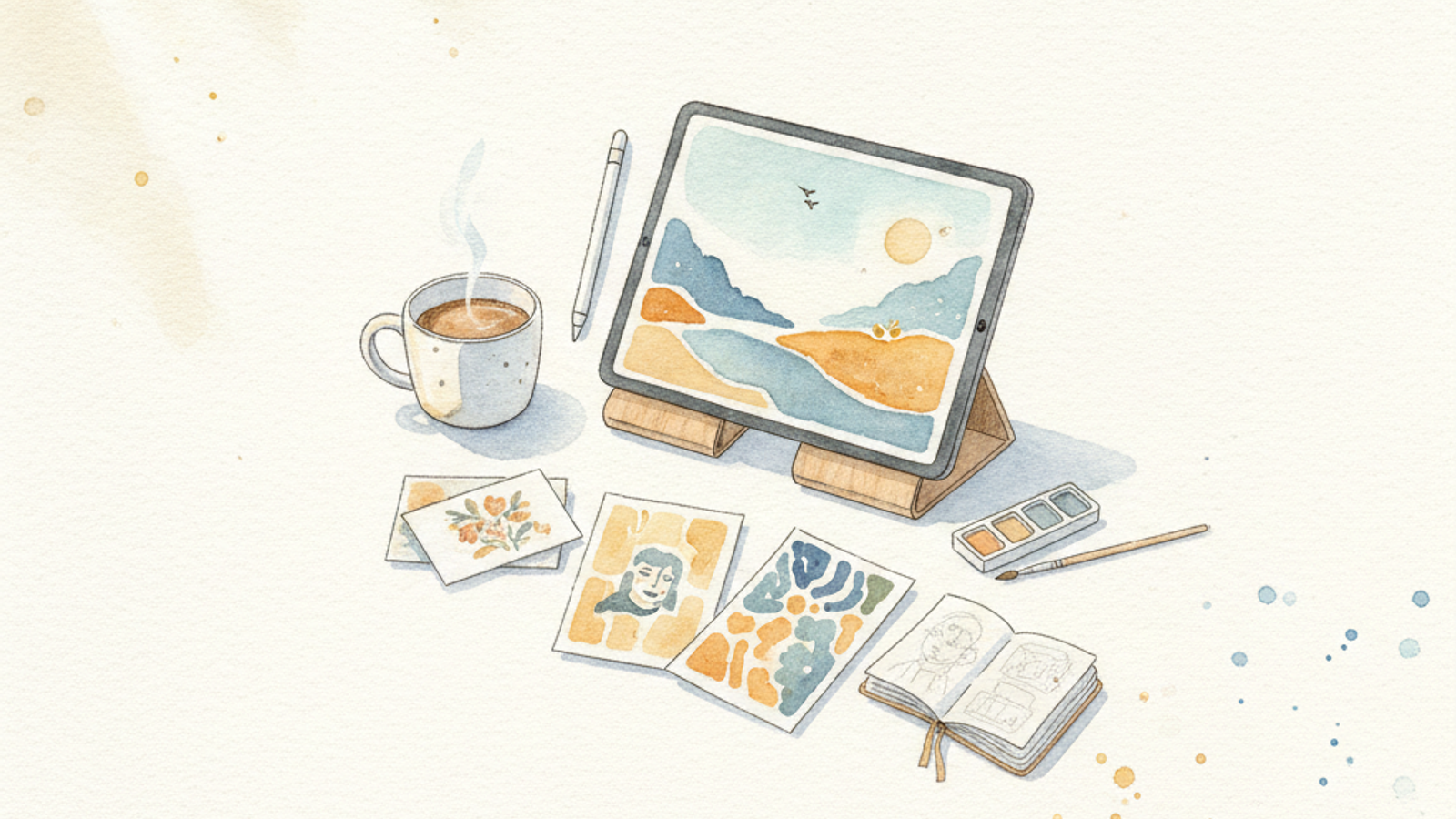
The Passive Income Promise: Why Digital Downloads Now?
As an independent artist, your time is your most valuable asset. Selling physical art is rewarding but often demands significant manual labor: production, packaging, shipping, and managing inventory. Digital downloads fundamentally shift this paradigm. Once created and listed, they can be sold repeatedly with virtually zero ongoing effort per sale. This frees up your time to create more art, explore new mediums, or simply enjoy life beyond the studio. In an increasingly digital world, the demand for instant-access art, whether for personal use, decoration, or creative projects, is consistently growing.
Think of it: a customer buys a print-at-home illustration at 2 AM their local time, and you wake up to a sale without lifting a finger. There's no physical stock to manage, no postal delays to fret over, and no international shipping costs to calculate. This dramatically lowers your operational overhead and expands your potential customer base globally, instantly. This guide will walk you through concrete steps to integrate digital downloads into your OnlineGallery shop or other platforms, turning your creativity into a scalable, truly passive income stream.
What Kinds of Digital Art Sell Best?
The beauty of digital downloads lies in their versatility. Almost any art form can be adapted, but some categories consistently perform well due to high demand and clear utility:
- Printable Art: This is the most straightforward. Offer high-resolution JPG or PDF files of your existing paintings, illustrations, or photography. Customers print them at home or at a local print shop. Think wall art, greeting cards, or even planner inserts. Provide multiple aspect ratios (e.g., 2:3, 3:4, 4:5, ISO) to cater to various frame sizes.
- Digital Brushes & Textures: If you create digitally (e.g., in Procreate, Photoshop, Clip Studio Paint), package your custom brushes, texture packs, or color palettes. Artists frequently seek these tools to enhance their own workflow. Price these competitively, often between $5-$25 for a small pack, or $30-$70 for comprehensive sets.
- Digital Stickers & Clipart: Perfect for digital planners, scrapbooking, or even social media content. Offer transparent PNG files. These often sell for $3-$15 per pack and appeal to a broad demographic.
- Wallpapers & Desktop Backgrounds: Simple, high-impact visuals for phones, tablets, and computers. Package various sizes for different devices. These can be a great entry-level product, often priced at $1-$5 or even offered as lead magnets.
- Tutorials & Guides: If you're an expert in a specific technique, create downloadable PDFs, video links (hosted elsewhere like Vimeo/YouTube private), or step-by-step guides. These offer immense value and can command higher prices, from $20 for a mini-guide to $100+ for comprehensive courses.
Pro Tip: Start with repurposing existing artwork. Can your landscape painting become a printable? Can elements of your illustrations be extracted for a clipart pack? This minimizes initial creation time.
Choosing Your Sales Platform(s)
Where you sell your digital art heavily impacts your reach, fees, and control. Diversifying across platforms can be a smart strategy.
- Your OnlineGallery Shop: While OnlineGallery currently focuses on physical art for showcasing and sales, it's an ideal hub for directing traffic to dedicated digital storefronts. Use your OnlineGallery profile to link directly to your digital product listings on other platforms. This keeps your primary portfolio clean while still informing buyers of your full offerings.
- Etsy: A massive marketplace with millions of active buyers, Etsy is a prime spot for printable art, digital stickers, and brushes. Expect transaction fees (e.g., 6.5% + $0.20 listing fee per item every 4 months), but also significant organic traffic. It's excellent for testing demand.
- Gumroad: Favored by creators for its simplicity and flexibility. Gumroad offers a clean checkout experience and handles file delivery. Their fees start at 10% for new creators, scaling down as you earn more, reaching 2.9% + $0.30 per transaction for those earning over $1M. Great for selling tutorials, brush packs, and unique digital assets directly to your audience.
- Creative Market: If your digital art targets other designers or creators (e.g., fonts, templates, textures, brushes), Creative Market is a curated marketplace with a strong professional audience. They take a 40% commission, but the exposure to a niche B2B market can be invaluable.
- Shopify (with a digital download app): For maximum control and branding, a Shopify store allows you to integrate apps like 'Digital Downloads' by Shopify or 'Sky Pilot' to automate delivery. Shopify plans start at $29/month, plus transaction fees if not using Shopify Payments. This is a more advanced option for artists with a larger product catalog or established brand.
Pricing Your Digital Products Smartly
Pricing digital art is different from physical art. While your time investment is upfront, the replication cost is zero. Consider these factors:
- Value Proposition: What problem does your digital product solve, or what joy does it bring? A unique printable that perfectly matches a popular aesthetic might command $7-$15. A specialized brush pack saving hours for a professional artist could be $30-$70.
- Market Research: Browse competitor pricing on platforms like Etsy, Gumroad, or Creative Market. Don't undersell your work, but be aware of the going rates. Aim for the mid-to-high range if your quality stands out.
- Licensing: Offer different price tiers based on usage. A personal use license (e.g., for home decor) will be cheaper than a commercial use license (e.g., for a small business to print on mugs), which could be 5-10x higher. Clearly define terms of use.
- Bundles & Promotions: Offer discounts for buying multiple items (e.g., 3 printables for $25 instead of $10 each). Run seasonal sales (e.g., 20% off during holiday periods) to boost conversions.
Preparing Your Files for Seamless Delivery
Technical execution is crucial for customer satisfaction. Poor quality files lead to refunds and bad reviews. Here’s what to focus on:
- Resolution: For printable art, provide at least 300 DPI (dots per inch) at the desired print size. For screen-based products like wallpapers, 72-150 DPI is usually sufficient, but ensure dimensions are large enough (e.g., 1920x1080 for desktop, 1170x2532 for iPhone 13 Pro).
- File Formats: JPG for general images (offer both CMYK for print and RGB for screen), PNG for transparent backgrounds (stickers, clipart), PDF for multi-page documents (guides, printables with instructions), and native formats for brushes (e.g., .abr for Photoshop, .brushset for Procreate).
- Organization: If offering multiple sizes/formats, package them neatly into a single ZIP file. Include a clear README.txt or PDF with instructions, printing tips, and your terms of use.
- Watermarks: Always use watermarks on your product previews and promotional images. The downloaded files, of course, should be watermark-free.
- File Size: Keep file sizes reasonable. Large files can be slow to download, especially for mobile users. Compress images without losing quality where possible.
Crucial Step: Test your download process! Purchase your own product (or use a test link if the platform allows) to ensure the files are delivered correctly and are exactly as advertised.
Marketing Your Digital Goldmine
Even the best digital product won't sell itself. A robust marketing strategy is key:
- High-Quality Mockups: Don't just show the file. Show it in use! Use mockups of framed art in beautiful rooms, digital brushes in action on a tablet screen, or stickers on a digital planner. Sites like Smartmockups or Placeit offer great tools for this.
- SEO Optimization: For platforms like Etsy or your own site, use relevant keywords in your titles, descriptions, and tags (e.g., "botanical printable art," "Procreate watercolor brushes"). Think like a buyer: what would they type into the search bar?
- Social Media: Showcase your products on Instagram (reels, stories, posts), Pinterest (ideal for printables and aesthetic content), and TikTok. Use relevant hashtags and collaborate with influencers if budget allows.
- Email List: If you have an email list, announce new digital products and offer exclusive discounts to your subscribers. This is your most engaged audience.
- Cross-Promotion: Mention your digital products in your physical art listings on OnlineGallery and vice-versa. A buyer of a physical print might love a matching digital wallpaper or brush set.
Legalities: Copyright and Licensing
This is non-negotiable. Clearly defined terms protect both you and your buyers.
- Your Art, Your Copyright: As the creator, you automatically own the copyright to your artwork. Selling a digital download typically means selling a license for its use, not transferring the copyright itself.
- Personal Use License: This is standard for most printable art. It allows the buyer to print and use the artwork for personal, non-commercial purposes. They cannot resell it, modify it for resale, or use it on products for sale.
- Commercial Use License: If you offer this, be extremely clear about the scope. Is it for small businesses? How many units can they produce? Is it for digital or physical products? What attribution is required? Charging a significantly higher price for commercial use is standard practice. Consider setting a tiered system (e.g., Small Business License for up to 500 units, Extended License for unlimited).
- Terms of Use Document: Include a concise, easy-to-understand terms of use PDF within your downloaded ZIP file and also visibly on your product listing pages. State clearly what is and isn't allowed.
Making it Truly Passive: Automation and Scaling
The 'passive' in passive income relies heavily on automation. Your chosen platform (Etsy, Gumroad, Shopify with digital apps) handles the heavy lifting of file delivery, payment processing, and often basic customer service queries. Your role shifts from fulfilling individual orders to creating new products and marketing your existing ones.
- Batch Creation: Instead of one-off digital items, create collections or series. Design 5-10 complementary printables at once, or a full suite of digital brushes. This makes your production more efficient.
- Evergreen Content: Focus on digital products that aren't seasonal or trend-dependent. While holiday printables sell well for a short period, abstract art, general purpose brushes, or classic aesthetics will generate income year-round.
- Feedback Loop: Pay attention to reviews and direct messages. Are customers asking for different sizes, formats, or new product types? This feedback is gold for future product development.
- Delegation (Optional): As your digital business grows, consider hiring a virtual assistant for customer service, marketing tasks, or even mockup creation. This scales your passive income even further.
Embracing digital downloads is not about replacing your physical art sales; it's about complementing them and creating a diversified, resilient income stream. By carefully planning your products, choosing the right platforms, and implementing smart marketing, you can leverage your artistic talent to generate significant passive income. Start small, learn what resonates with your audience, and scale from there. The digital world is waiting for your art.
Show Your Work to the World
A professional online gallery is the first thing buyers and licensing partners want to see. Build yours on OnlineGallery — free, no commission.
Create Your Gallery Free