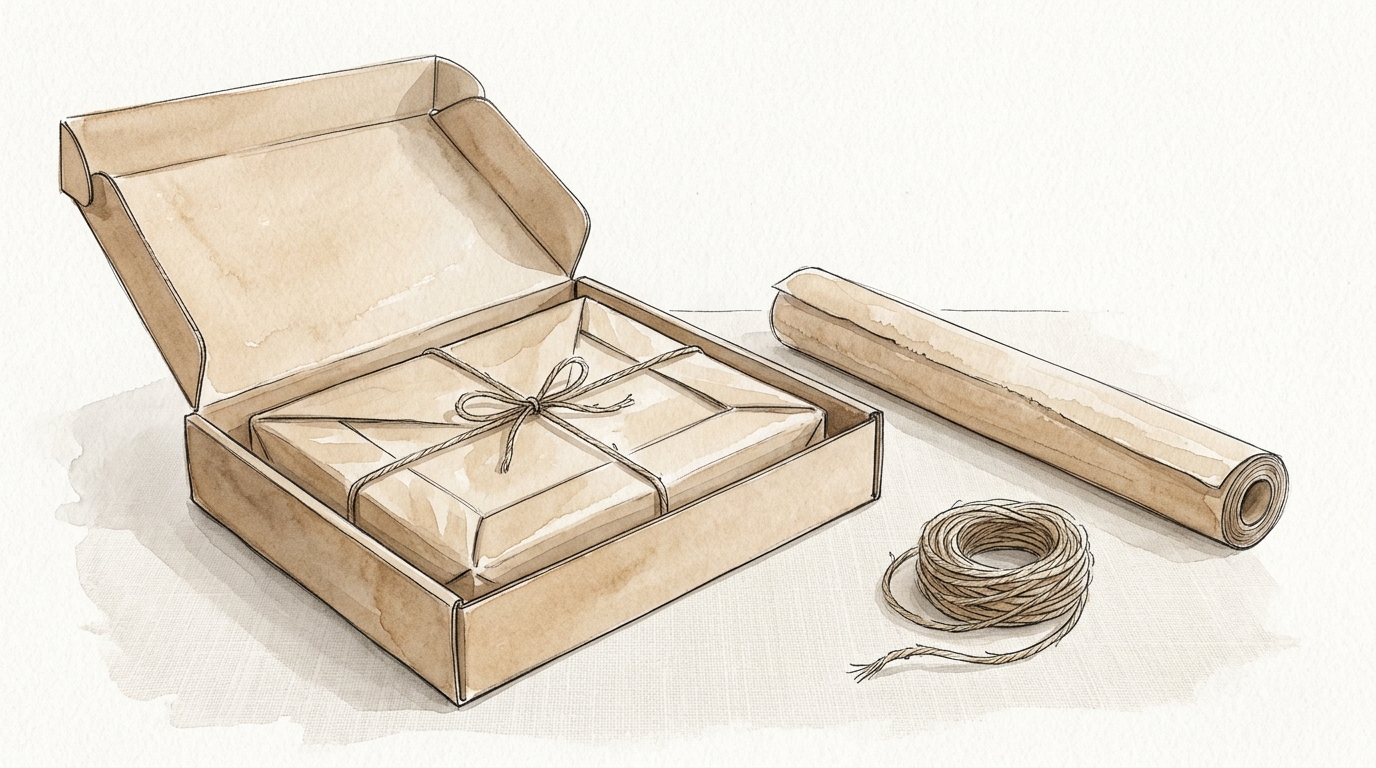
1. Essential Art Packaging Materials
Many shipping damage claims are denied by couriers because the artwork was not packaged according to industry standards. Using cheap materials like newspaper or standard thin boxes is a recipe for heartbreak.
Invest in the following professional packaging supplies:
- Glassine Paper: An acid-free, grease-resistant paper. It is the only material that should touch the painted surface of a canvas. Never use plastic wrap directly on paint, as changes in temperature can cause it to fuse to the surface.
- Corner Protectors: Cardboard or foam guards that slide onto the corners of a canvas to absorb drops.
- Heavy-Duty Bubble Wrap: Use bubble wrap with large bubbles (at least 1/2 inch) to cushion the painting.
- Double-Walled Boxes: Look for heavy-duty boxes with a Bursting Test rating of at least 275 lbs.
2. Step-by-Step Wrapping Guide
Follow this sequence to wrap your artwork:
- Wrap with Glassine: Cover the front and sides of the painting with glassine paper. Tape it secure on the back of the stretchers using acid-free artist tape.
- Apply Corner Guards: Fit cardboard corner guards securely on all four corners.
- Create a Moisture Seal: Wrap the glassine-covered painting in a plastic poly bag or wrap it in plastic stretch wrap. This seals out moisture and humidity in case the package is left in the rain.
- Wrap in Bubble Cushion: Wrap the painting with at least 2 complete layers of large-bubble wrap, taping all seams shut.
3. The Double-Boxing Method
The double-boxing method is the gold standard for shipping fragile paintings under 30" × 40". It creates a dual-layer buffer that prevents punctures.
💡 The Double-Boxing Formula: Wrap the painting, place it in an inner box with tight fit, then place that inner box inside a secondary, outer box that is 2 inches larger on all sides. Fill the 2-inch gap between the inner and outer box with dense foam sheets or packing peanuts.
4. Building Wooden Crates for Large Art
For paintings larger than 40" × 40", or heavy sculpture, standard cardboard boxes will fold under weight. You must build or buy a wooden crate.
Construct crates using 1/2-inch plywood panels and 1" × 3" pine framing studs. Line the interior walls with 1-inch thick Styrofoam sheets. Ensure the wrapped artwork is held snugly in place inside the foam cushion. Screw the top plywood panel down rather than nailing it, so the buyer can easily remove it without damaging the contents.
5. Shipping Insurance and Customs Documents
Always declare the actual sale value of the artwork on the customs manifest. Label the item with the correct HS tariff code: 9701.21.0000 (for original paintings, drawings, and pastels executed entirely by hand). This classification ensures the artwork is imported duty-free in most countries.
Additionally, buy transit insurance covering the full retail value of the painting. Take high-resolution photos of the wrapped painting and the sealed box before handing it to the courier. These photos serve as crucial evidence if you need to file an insurance claim.
Safe packaging is only half the battle. You must track where your artwork is heading and update listings to prevent double-selling during transit. Using OnlineGallery.com simplifies this process. Track packaging tasks, log shipping tracking codes, and update listing statuses across Saatchi Art, Etsy, and Singulart instantly from your secure dashboard.