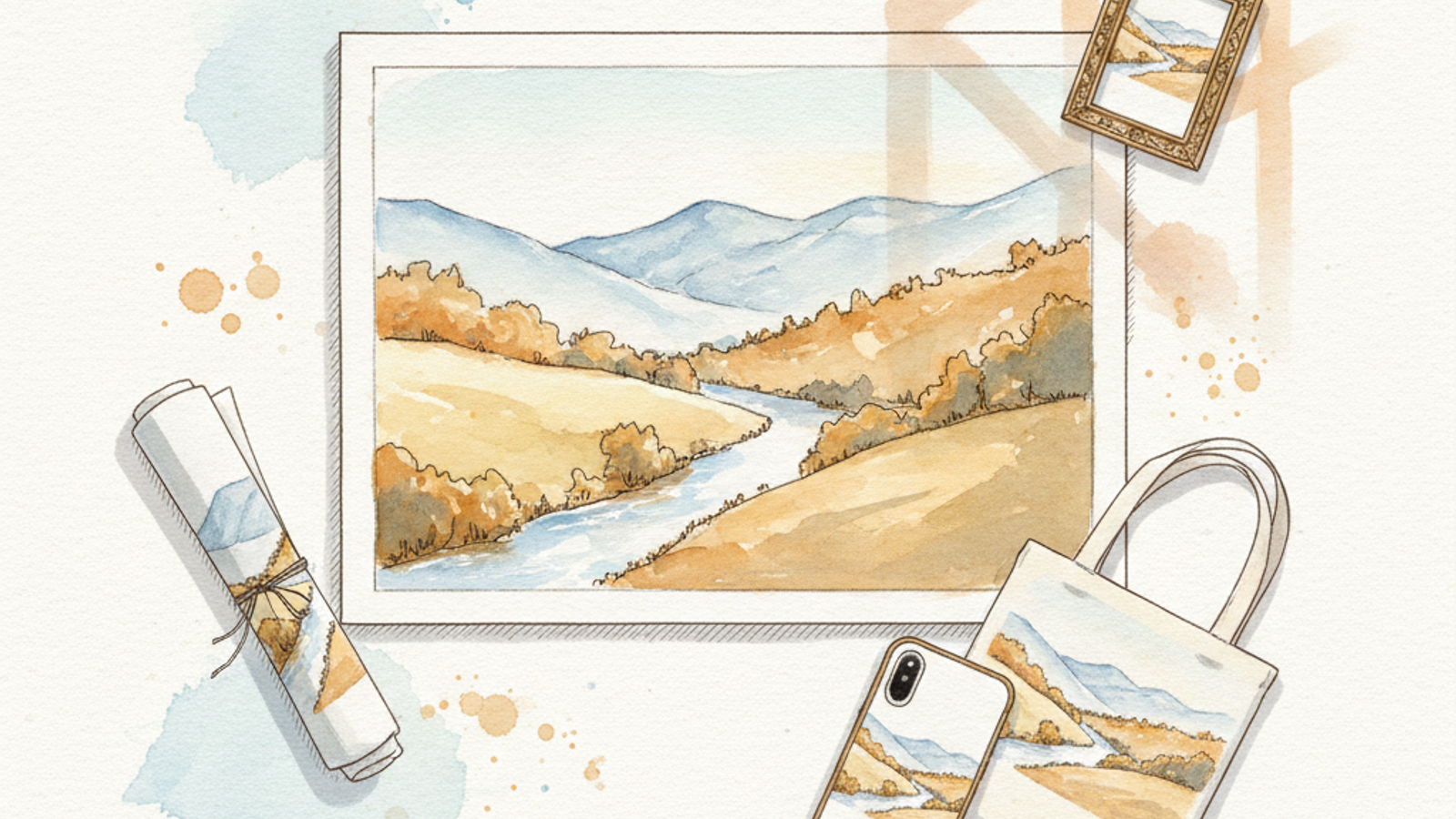
As an independent artist, your original paintings are unique masterpieces. But what if one masterpiece could generate not just one, but five distinct income streams? This isn't about diluting your art's value; it's about intelligent leverage, maximizing your reach, and building a sustainable, resilient art business.
Many artists mistakenly view their work as a one-and-done sale. In today's digital landscape, that perspective leaves significant money on the table. By strategically planning derivatives from the moment a piece is completed (or even conceived), you can transform a single artwork into a diverse portfolio of revenue. Let's break down exactly how to turn one original painting into five income streams, with practical steps and real platform recommendations.
The Crucial First Step: Professional Digital Capture
Before you can even think about diversifying income, you need an impeccable digital representation of your original artwork. This isn't just a quick snap with your phone. This is an investment.
Options for high-quality capture:
- Professional Scanning Service: For flat artworks up to 40x60 inches, professional art scanners (like those offered by local print shops or fine art reproduction services) yield the highest fidelity. Expect to pay $50-$150 per scan.
- Professional Art Photography: For larger pieces, heavily textured work, or framed art, a professional photographer specializing in art reproduction is essential. This often costs $100-$300 per piece, ensuring accurate color and no distortion.
The goal is a large TIFF or high-resolution JPEG file (at least 300 DPI at the original artwork's size) that faithfully represents your original. This single investment unlocks all subsequent income streams.
Income Stream 1: The Original Painting Sale
This is the primary and often highest-value income stream. Once you've completed a piece, price it fairly based on your experience, size, materials, and market demand. Your OnlineGallery.com profile is the ideal place to showcase and sell your originals directly to collectors.
Key Steps:
- High-Quality Photography: Use the digital capture mentioned above for your listing photos. Show details, scale, and context.
- Compelling Description: Tell the story behind the art, materials used, and dimensions. Be transparent about shipping costs and return policies.
- Pricing: A common strategy for emerging artists is (width + height in inches) x a per-square-inch rate ($5-$15+). For example, a 20x24 inch painting at $8/sq inch would be (20+24) x $8 = $352. (No, this is wrong. It should be 20x24 = 480 sq inches * $8/sq inch = $3840). Let me re-think this example. A common strategy for emerging artists is (width x height in inches) x a per-square-inch rate ($5-$15+). For example, a 20x24 inch painting at $8/sq inch would be (20 * 24) * $8 = $3,840.
Income Stream 2: Limited Edition Fine Art Prints (Giclée)
Giclée prints are high-quality, archival reproductions on fine art paper or canvas, often indistinguishable from the original to the untrained eye. Creating a limited run (e.g., 25, 50, or 100 editions) adds exclusivity and value.
How to Implement:
- Choose a Printer: Seek out local fine art reproduction studios or online services like WhiteWall or Giclée Today. They specialize in color matching and archival materials.
- Edition Size: Start with a smaller edition (e.g., 25 or 50) for testing the market. This creates urgency.
- Signing and Numbering: Each print should be signed, numbered (e.g., 1/50, 2/50), and perhaps include a certificate of authenticity. This is crucial for its value as a collectible.
Pricing Strategy: A common rule of thumb is to price limited edition prints at 10-20% of the original painting's price. So, for a $3,840 original, prints might range from $380-$760 depending on size.
Income Stream 3: Open Edition & Standard Prints/Posters
While limited editions cater to serious collectors, open edition prints offer broader accessibility at a lower price point. These are not signed or numbered and can be printed on a wider range of materials.
Platforms for Open Editions:
- Print-on-Demand (POD) Services: Platforms like Printful and Gelato integrate directly with your e-commerce store (e.g., Shopify). You upload the artwork, set your price, and they handle printing, shipping, and customer service. You typically pay production cost + shipping and keep the profit margin.
- Online Marketplaces: Redbubble, Society6, and Fine Art America allow you to upload your art and automatically apply it to prints (paper, canvas, metal), framed art, and posters. They handle everything, and you earn a set royalty (typically 10-20% of the base price) on each sale. For example, a 12x16 inch poster might sell for $25, earning you $2.50-$5.
Pricing: Open edition prints usually range from $20-$100, depending on size and material. Offer a variety of sizes to appeal to different budgets.
Income Stream 4: Art Licensing for Merchandise
Imagine your artwork on mugs, phone cases, tote bags, journals, or home decor items. Art licensing allows manufacturers to use your image on their products in exchange for a royalty or flat fee. This is largely passive income once the deal is struck.
Your art doesn't have to be overtly commercial to be licensable. Many companies seek unique, authentic fine art for their product lines. Think beyond just 'pretty pictures' to mood, color palettes, and emotional resonance.
Ways to License Your Art:
- Direct-to-Consumer (POD): Platforms like Redbubble, Society6, Zazzle, and Spoonflower (for fabric) allow you to apply your designs to hundreds of products. You earn 10-20% royalty on each item sold, with zero inventory risk.
- Licensing Agencies: Research agencies specializing in art licensing (e.g., Art Brand Studios, Bridgeman Images, MHS Licensing). They represent artists, pitch designs to manufacturers, and handle contracts. They typically take 30-50% of the licensing fee, but give you access to a huge network.
- Direct Outreach: Identify brands or small businesses whose aesthetic aligns with your art. Prepare a professional pitch deck showcasing your artwork on mock-ups of their products. Licensing fees vary wildly, but expect royalties of 5-15% of the wholesale price or flat fees ($500-$5,000+) for specific uses/durations.
Income Stream 5: Digital Licensing & NFTs
The digital realm offers powerful ways to monetize your artwork without physical production.
Digital Licensing for Commercial Use
Companies, bloggers, and designers often need high-quality images for their websites, social media campaigns, book covers, or presentations. You can license the digital file of your artwork for these uses.
- Direct Negotiation: Define the terms: usage (web, print, editorial), duration (1 year, perpetual), territory (local, worldwide), and exclusivity. Pricing for a single digital image license can range from $50 (for a small blog) to $500+ (for a major publication or ad campaign).
- Stock Photography Sites: While less common for fine art, some platforms like Adobe Stock or Getty Images might accept highly curated fine art images for commercial licensing. Earnings are typically low per download (e.g., $0.25-$5), but can add up over time.
Non-Fungible Tokens (NFTs)
NFTs offer a unique way to sell a digital certificate of ownership for your artwork. While anyone can view or copy a digital image, an NFT provides verifiable proof of ownership on a blockchain.
- Platforms: Explore marketplaces like OpenSea, Rarible, or Foundation. You'll need a crypto wallet (e.g., MetaMask) and some cryptocurrency (like Ethereum or Solana) to cover 'gas fees' for minting your NFT.
- Resale Royalties: A significant advantage of NFTs is the ability to program in creator royalties (e.g., 5-10%) on all future secondary sales. If your NFT is resold, you automatically earn a percentage.
Considerations: The NFT market is volatile. Success often depends on building a community and strong marketing. However, it's a rapidly evolving space that can open up new collector bases.
Maximizing Your Reach and Efficiency
Having multiple income streams from a single painting is smart, but managing them efficiently is key.
- Centralize Your Showcase: Use your OnlineGallery.com profile to not only list the original but also link to your limited edition prints, open edition products, and even your NFT listings. This provides a single, professional hub for all your offerings.
- Batch Process: When you get a piece professionally captured, make sure to process the digital file for various uses simultaneously: create web-optimized versions, print-ready files, and mock-ups for merchandise.
- Consistent Branding: Ensure your brand identity is consistent across all platforms. This builds trust and recognition.
Conclusion: A Sustainable Art Business
By following this guide, you can move beyond the single-sale model and build a robust, diversified income from each original painting. It requires strategic planning, a good initial investment in digital capture, and an understanding of the various marketplaces available. But the reward is a more stable and profitable art career, allowing you to focus more on what you do best: creating beautiful art.
Show Your Work to the World
A professional online gallery is the first thing buyers and licensing partners want to see. Build yours on OnlineGallery — free, no commission.
Create Your Gallery Free